








Advertising [Product3rdColumn]
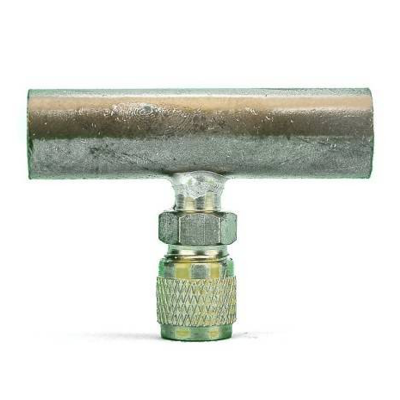
Copper Sleeve 5/8 Solder Union With Valve Obus Plug

Advertising [ProductAdditionalInfo]
local_shipping FREE shipping on orders over $25.00 shipped by Amazon. Details
Types of blowtorch welding: soft and hard solderingIn this article you will see everything you need to know to carry out welds on copper pipes or other metals using a blowtorch, very useful if you want to repair a copper pipe leak or if you want to install a radiator, a washbasin, etc. Soldering copper or other metals with a blowtorch consists of joining copper parts with the help of a second metal that melts between them. The melting temperature of the filler metal bar must be lower than that of the copper or metal to be soldered. The part to be soldered does not melt, therefore it is not a fusion weld of the base material. This type of welding is used when you want to join different materials, or those that have poor weldability and high strength is not required. It is the easiest welding technique to perform, even for DIY novices.There are two types of welding regarding the melting temperature of the filler material: soft soldering and hard soldering. Soft soldering requires reaching temperatures below 450ºC, whilst hard soldering uses temperatures above 450ºC. For example, filler materials made of silver and copper require temperatures of 600ºC and 900ºC. The higher the melting temperature of the filler material, the greater the strength of the joint. In electronics, the filler material consists of 60% tin and 40% lead and the temperature needed for its fusion is only 190ºC. Previously, with lead pipes, a large proportion of lead was used in the filler material, but nowadays with copper pipes it has been removed from the filler material and replaced with copper and a higher proportion of tin. The filler material used in hard soldering is generally an alloy of copper, copper phosphate and zinc, or copper and silver. The melting point is between 600ºC and 880ºC. Alloys with a high proportion of silver (40%) are recommended for making welds of high mechanical strength and are those used for copper and brass gas pipe joints. Brass is used for joining steel parts. The filler metal or flux is used with a flux, which is responsible for removing impurities from the joint surface and also oxides so that the flux adheres well.Choosing the right blowtorch depending on the type of welding to be performedThe soldering lamp: powered by a butane or butane/propane cartridge. It is ideal for soft soldering (with tin wire). Soldering blowtorch: powered by butane or propane gas cylinders and which provide a larger flame, usually come with various nozzles for different applications. This blowtorch is suitable for soldering different metals and alloys: tin, copper, brass, aluminium and zinc. Its use is not recommended for ferrous metals as it offers little mechanical resistance in joints. Bi-gas blowtorch: powered by an LPG or acetylene cartridge, mixed with oxygen under pressure, from another container. It is ideal for hard soldering large diameter pipes and also for ferrous metals. Professionals usually use this type of blowtorch for all hard soldering as it makes their work much easier as it provides a higher temperature. Choosing the filler metal or flux The choice of filler metal will depend on the type of material to be soldered and the strength required for the joint and will influence the type of blowtorch to be used. The more resistant the filler material, the higher its melting temperature. Type of welding Mechanical strength Application Soft soldering (tin) Weak: 5 kg/mm2 Installation of taps, extension of water lines. Hard soldering (copper/phosphorus) 50 kg/mm2 Cold and hot water pipes, radiators, water circuits. Copper/silver 6% and 20% 60 kg/mm2 Helps professionals achieve resistant and watertight joints. The silver content helps rotate the parts whilst they are being soldered, ensuring a good seal. Copper/silver 40% 40 kg/mm2 Copper pipe for gas. Procedure for soldering with a blowtorch You must prepare the material to be soldered very well, sanding the two surfaces to be joined with sandpaper. Then, with a soft cloth we remove the dust and finally with a brush. Apply the flux to the joint that will receive the filler metal and fit the parts in their final position. The parts to be soldered must be held (if necessary) with clamps as copper and its alloys are good heat conductors. If you are going to solder against a wall, there are special fire-resistant fabrics to isolate the

feedback Report comment