







Advertising [Product3rdColumn]
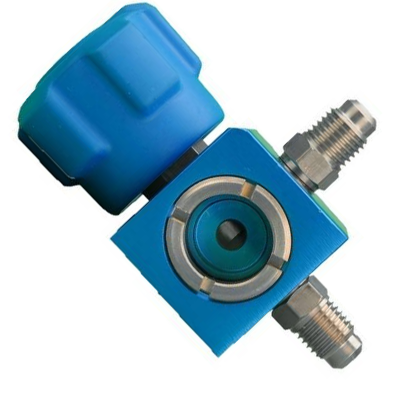
Bridge Manometer Analyzer 1 Low Track With Viewer Without Pressure Gauge

Advertising [ProductAdditionalInfo]
local_shipping FREE shipping on orders over $25.00 shipped by Amazon. Details
- VIDEO TUTORIAL AIR CONDITIONING GAS CHARGE HOW TO USE A GAS ANALYSER When carrying out a gas charge, we will need several measuring devices and some tools. There are several methods for adjusting the refrigerant charge as well as the mechanism when charging a unit. First and foremost, as the main element we will need a pressure analyser; a two-valve analyser is normally used, but we should note that there are also four and five-valve analysers on the market. The analyser consists of two valves: one for low pressure and another for high pressure. Two pressure gauges, one blue in colour which will indicate low pressure, its range is usually 0 to 10 bar and incorporates several pressure-temperature scales in relation to the most characteristic gases (R 22, R 134a, R 407C); the other gauge will be red in colour, this will indicate high pressure, its range is usually 0 to 30 bar, and as in the case of the low pressure gauge it also incorporates several temperature scales for the aforementioned gases. The analyser consists of three SAE ¼ screw couplings for gases such as R 22, R134a, R 404 and R 407C; for R 410C gas we must use ¼ screw couplings as it operates at higher pressures. Three hoses will be connected to these three threads which will connect on one hand the low pressure side of the refrigeration unit to the low pressure gauge (blue), on the other hand the high pressure side of the refrigeration unit to the high pressure gauge (red) and a hose connected to the central thread which will be used as a service hose which will be yellow in colour; the refrigerant gas cylinder will be connected to this yellow hose. It also incorporates a sight glass where you can see the passage of refrigerant fluid. First of all, a series of precautions will be followed; it will be checked that at all couplings there are no damaged thread, dirt, dust, oil or grease. It will be verified that on the gauge sight glasses there is no dust; if there is, a clean cloth will be used, in no case will cleaning be carried out with aggressive detergents or disinfectants. Secondly, the hoses will be purged. The yellow hose is connected to the refrigerant cylinder which will be closed. The low pressure hose (blue) is connected to the refrigeration system. The cylinder is opened. When the hoses are full of gas, the air is purged from them. We will perform the same operation for the high pressure hose (red). The charge can be carried out by low or high: By low pressure (pure or azeotropic gases) The yellow hose is connected to the refrigerant gas cylinder, it is purged and the system is saturated with gas; once the pressures equalise, the refrigeration unit is started and the low pressure valve of the analyser is opened so that the system itself introduces the gas into the unit. The cylinder can be heated to increase the temperature and in turn the pressure and thus we will manage to introduce gas more quickly. This method is the most used as you can measure the superheating and subcooling that the refrigeration circuit offers and can be adjusted without needing to know the final weight of refrigerant; another of the indicators that will help us know if the charge is correct will be the power consumption intensity of the compressor as well as the thermal jumps that we can measure in the heat exchangers. The approximate data for refrigeration units will be: Superheating Between 5 °C and 12 °C Subcooling Between 5 °C and 12 °C Thermal jump in air heat exchangers Approximately 10 °C Thermal jump in water heat exchangers Approximately 5 °C Electrical consumption Below nominal intensity
feedback Report comment